A Free Mind Is a Human Right
Cognitive Freedom Bill of Rights
Twelve principles for the freedom to think, the privacy of the mind and the right to remain yourself.
Explore proposed protections for Cognitive Liberty, mental privacy and informed consent as neurotechnology develops.
Developed by Maxis Richards, the Cognitive Freedom Bill of Rights is an advocacy framework for public discussion, not enacted legislation. The statements and artwork below reproduce the original twelve-part campaign.
01 / Twelve Rights
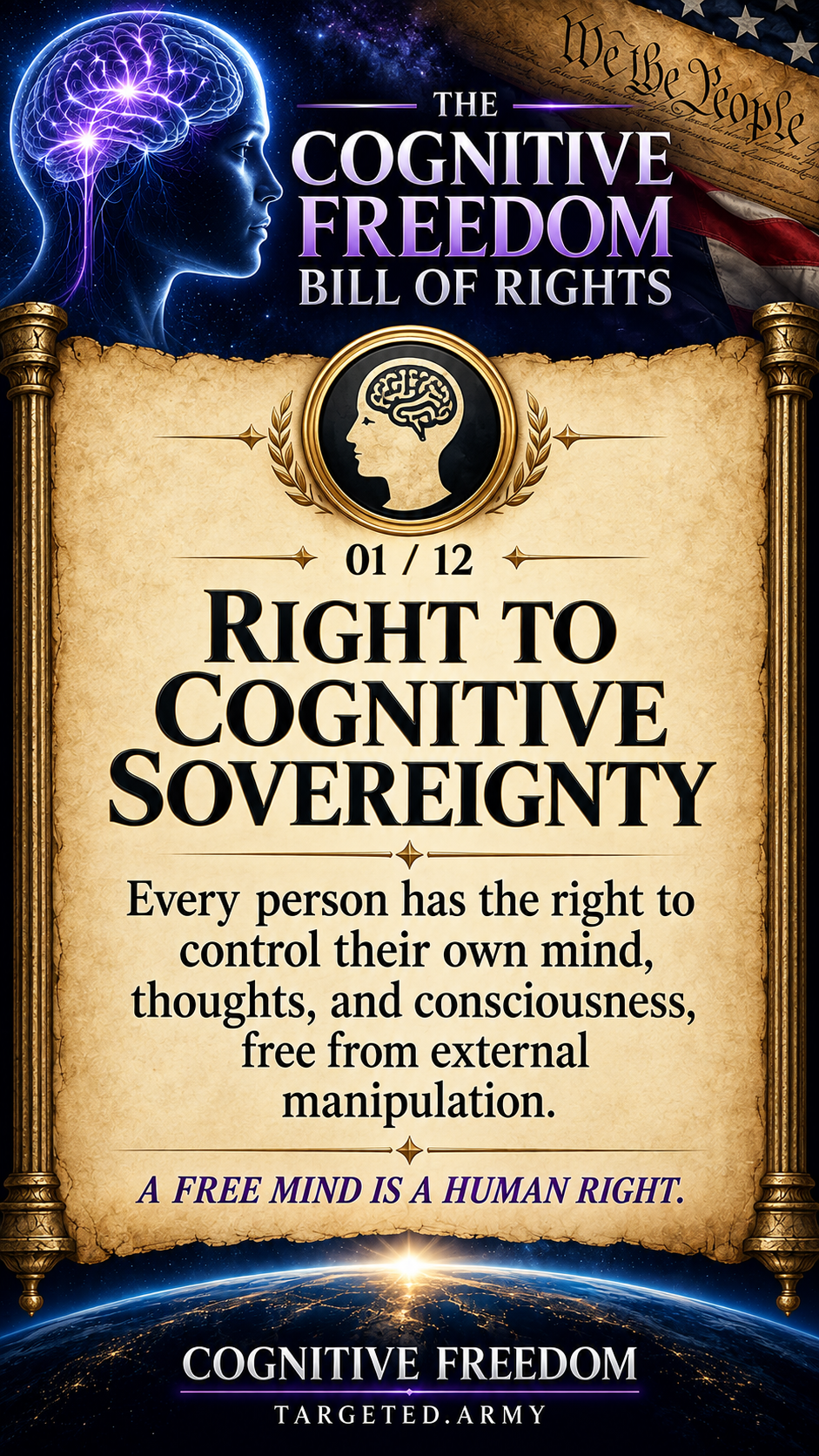
Right to Cognitive Sovereignty
Every person has the right to control their own mind, thoughts, and consciousness, free from external manipulation.
02 / Twelve Rights
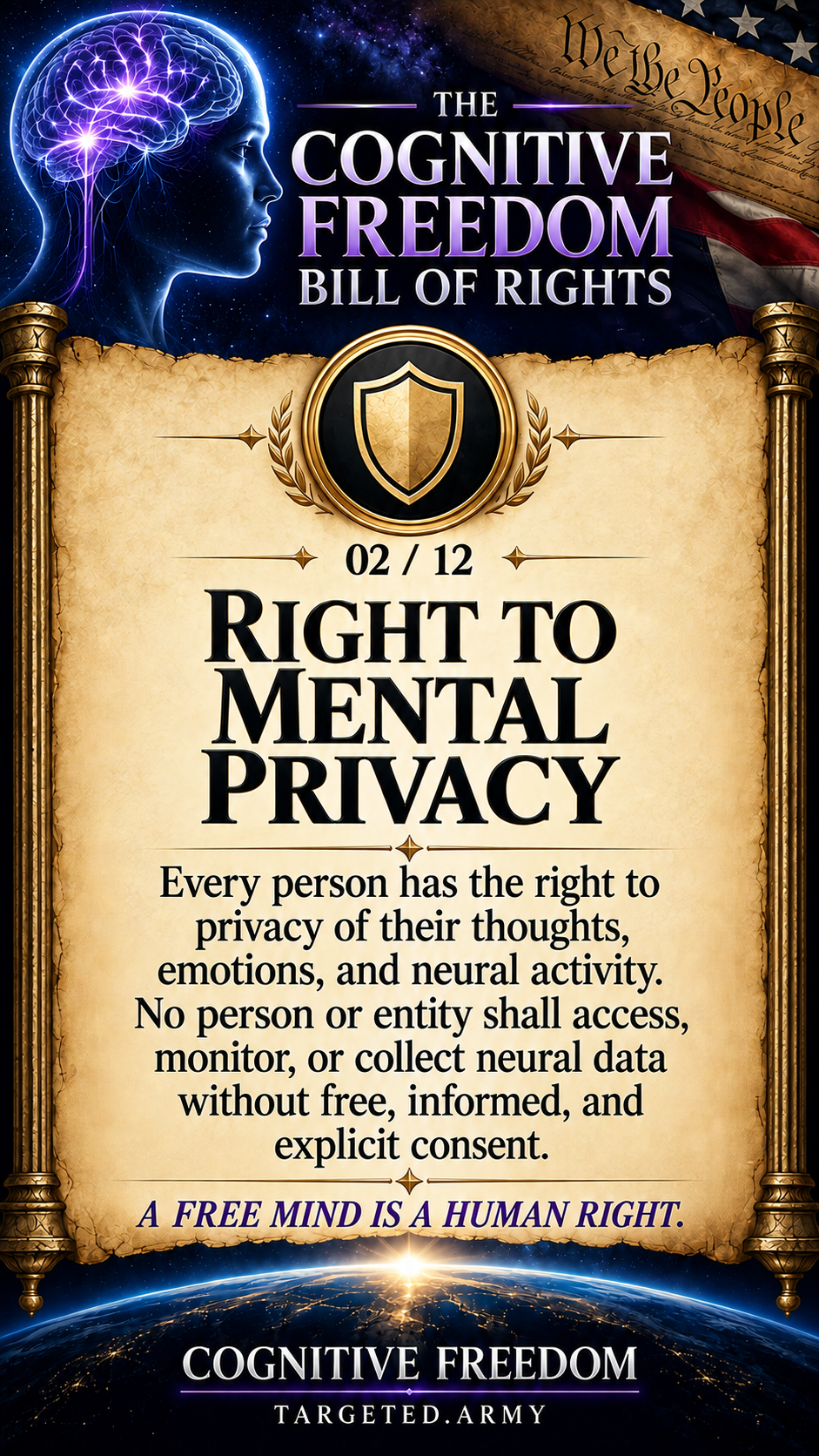
Right to Mental Privacy
Every person has the right to privacy of their thoughts, emotions, and neural activity. No person or entity shall access, monitor, or collect neural data without free, informed, and explicit consent.
03 / Twelve Rights
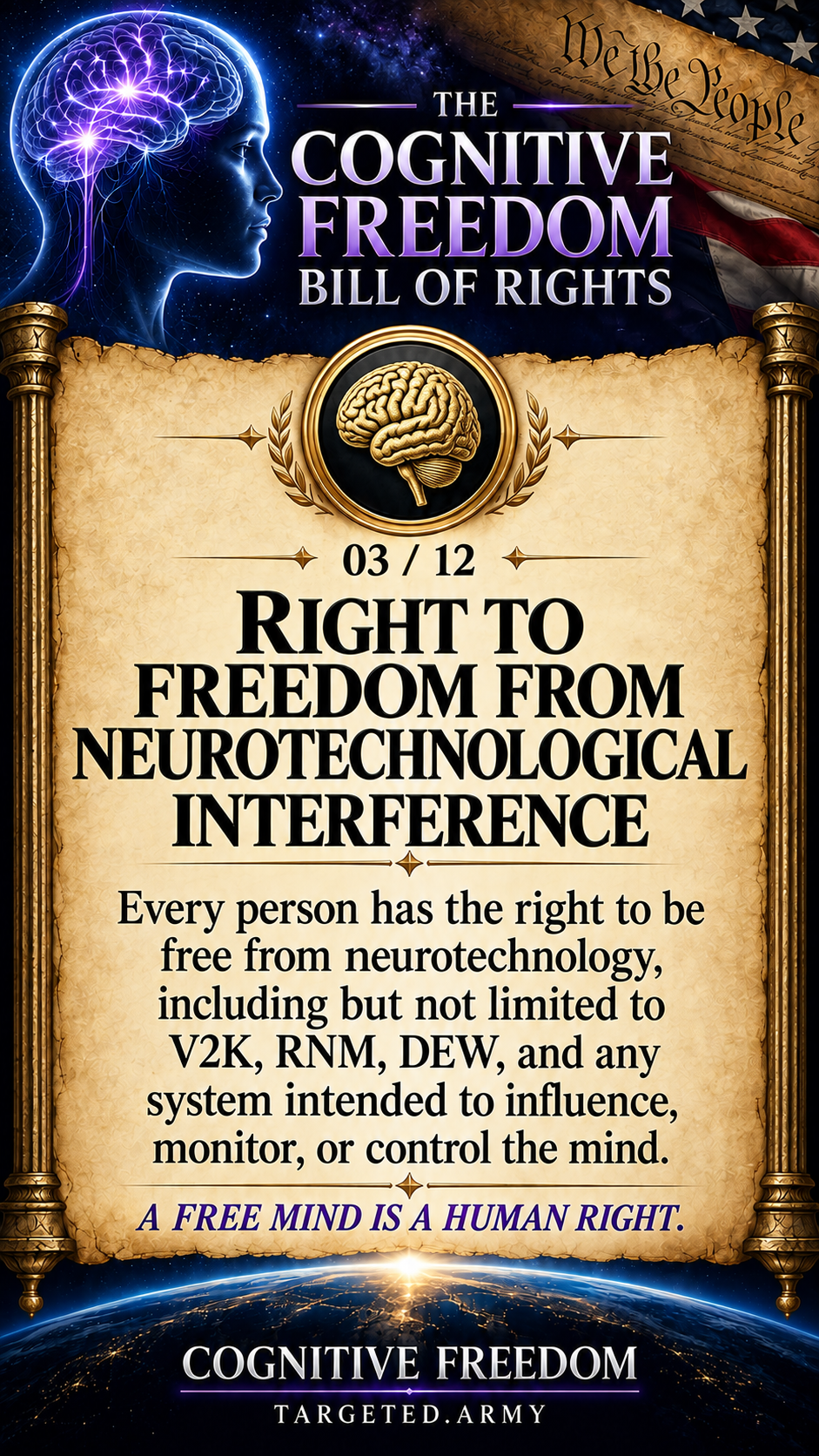
Right to Freedom from Neurotechnological Interference
Every person has the right to be free from neurotechnology, including but not limited to V2K, RNM, DEW, and any system intended to influence, monitor, or control the mind.
04 / Twelve Rights
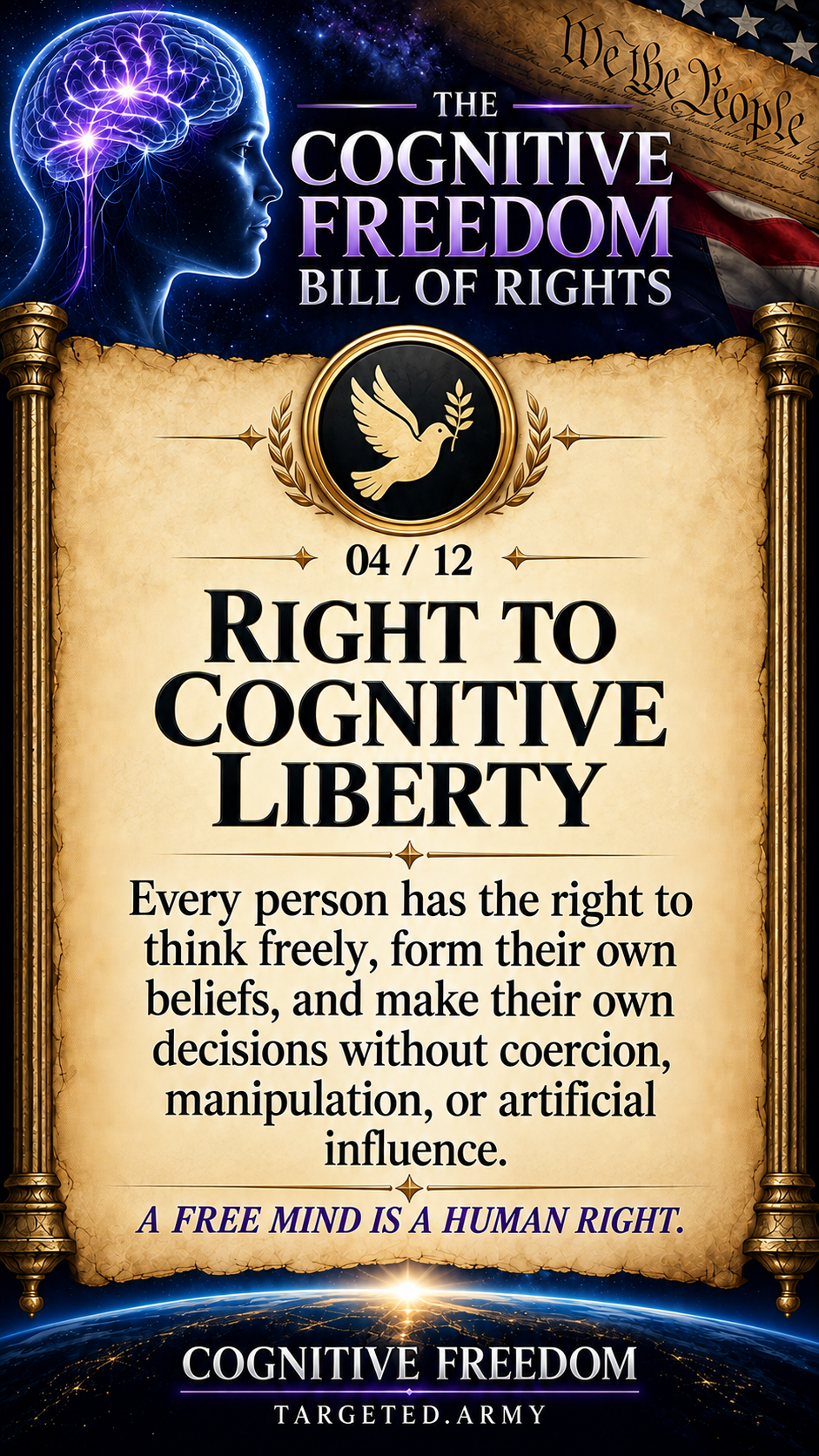
Right to Cognitive Liberty
Every person has the right to think freely, form their own beliefs, and make their own decisions without coercion, manipulation, or artificial influence.
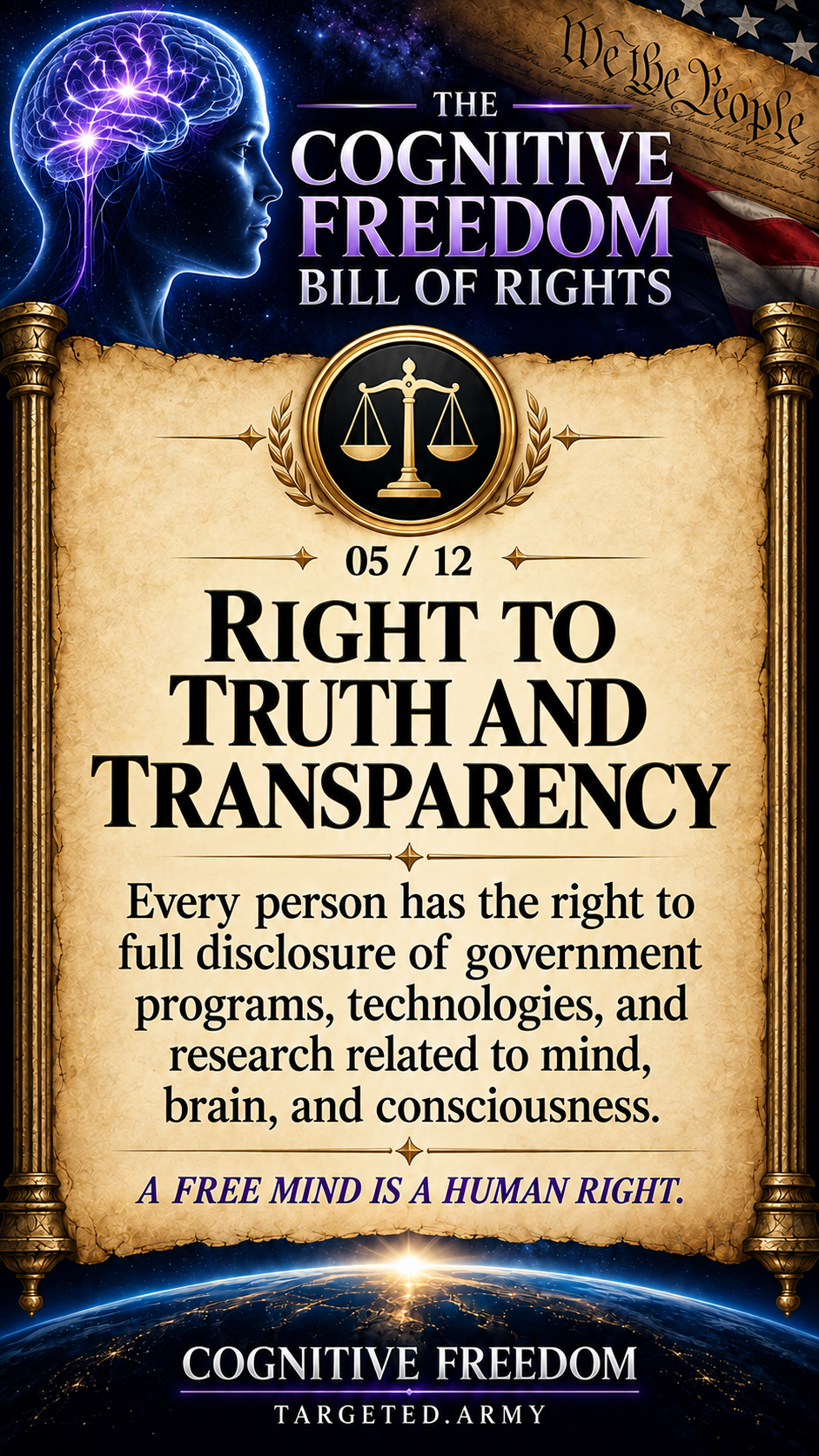
05 / Twelve Rights
Right to Truth and Transparency
Every person has the right to full disclosure of government programs, technologies, and research related to mind, brain, and consciousness.
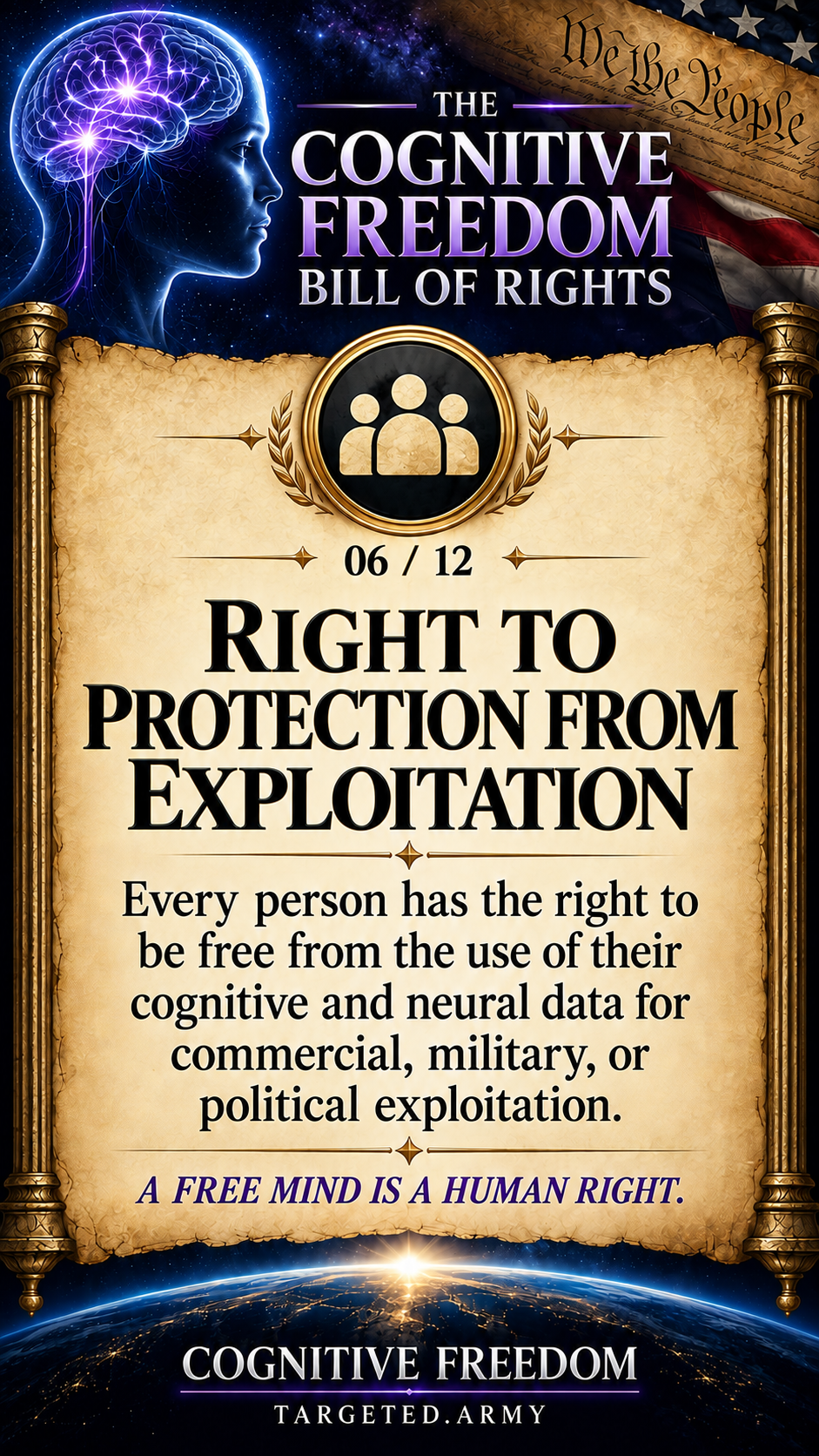
06 / Twelve Rights
Right to Protection from Exploitation
Every person has the right to be free from the use of their cognitive and neural data for commercial, military, or political exploitation.
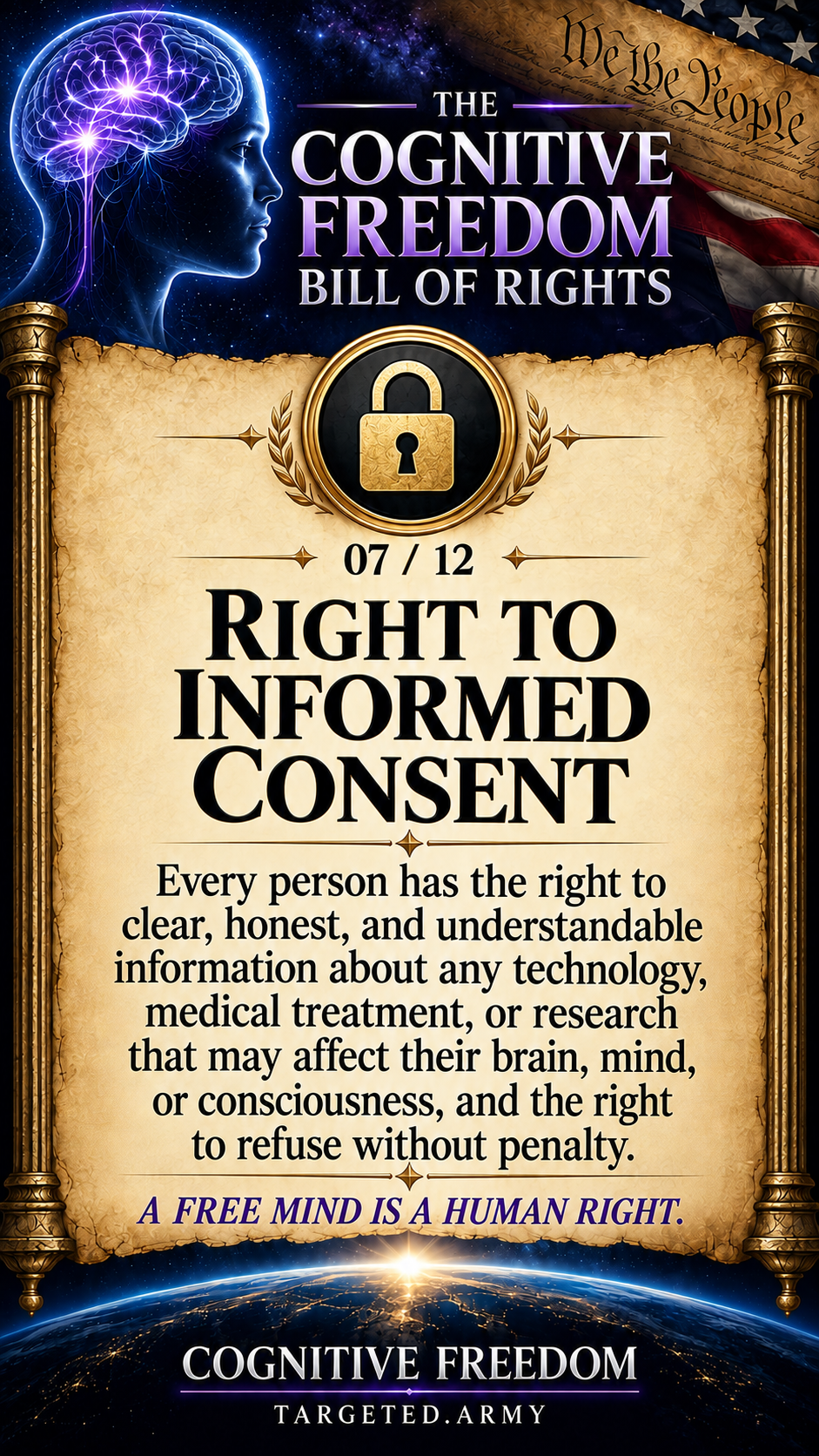
07 / Twelve Rights
Right to Informed Consent
Every person has the right to clear, honest, and understandable information about any technology, medical treatment, or research that may affect their brain, mind, or consciousness, and the right to refuse without penalty.
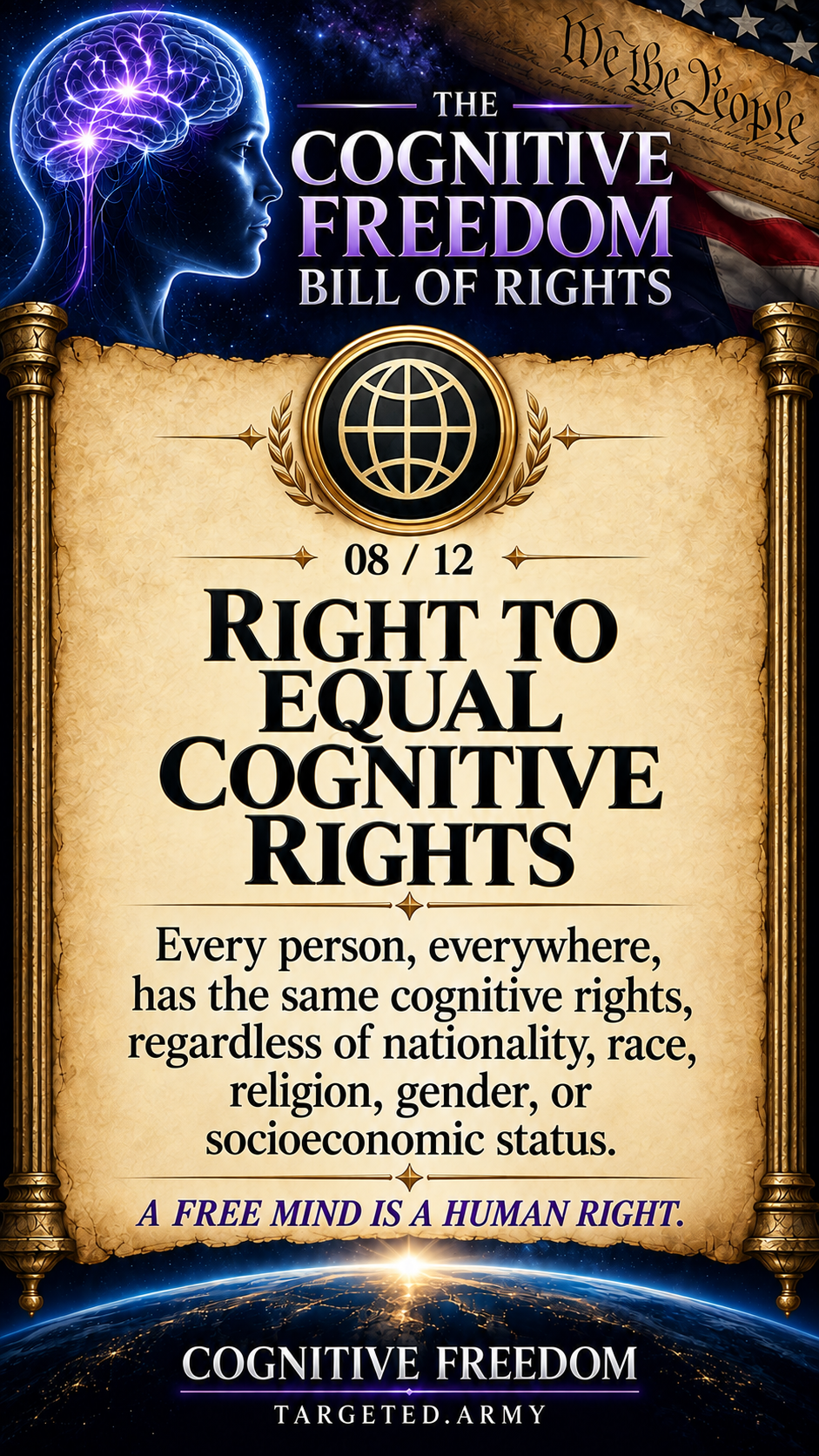
08 / Twelve Rights
Right to Equal Cognitive Rights
Every person, everywhere, has the same cognitive rights, regardless of nationality, race, religion, gender, or socioeconomic status.
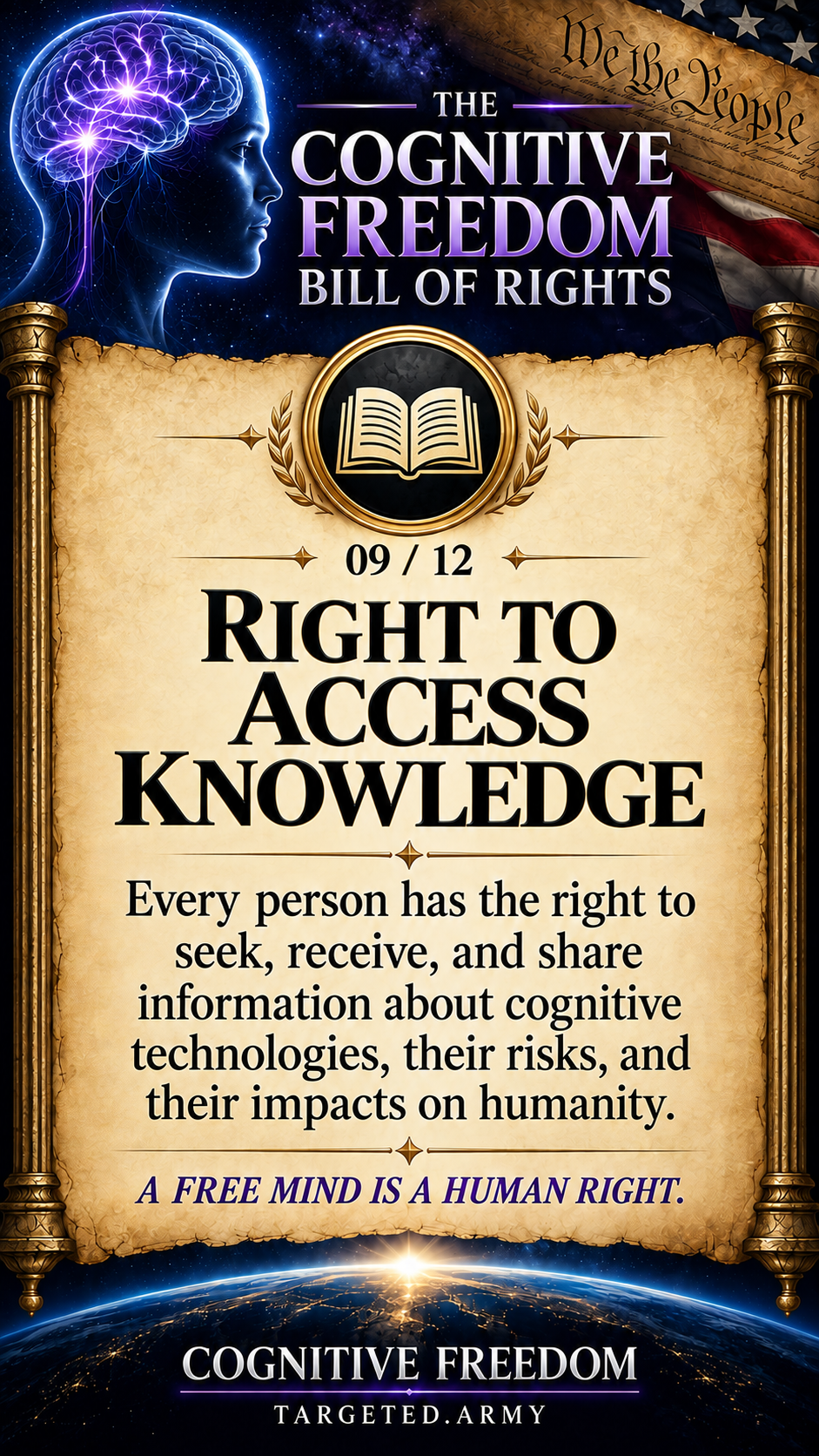
09 / Twelve Rights
Right to Access Knowledge
Every person has the right to seek, receive, and share information about cognitive technologies, their risks, and their impacts on humanity.
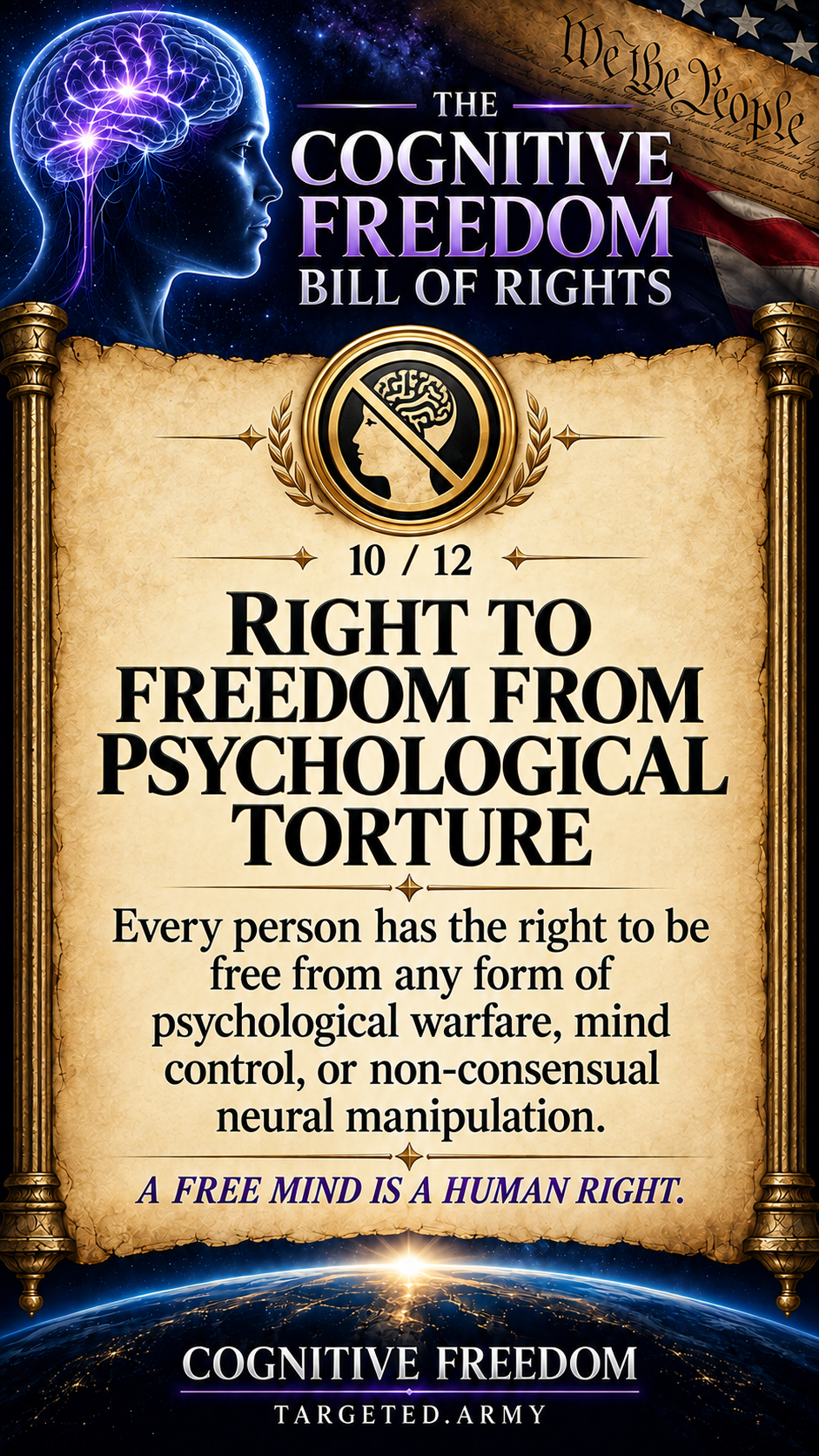
10 / Twelve Rights
Right to Freedom from Psychological Torture
Every person has the right to be free from any form of psychological warfare, mind control, or non-consensual neural manipulation.
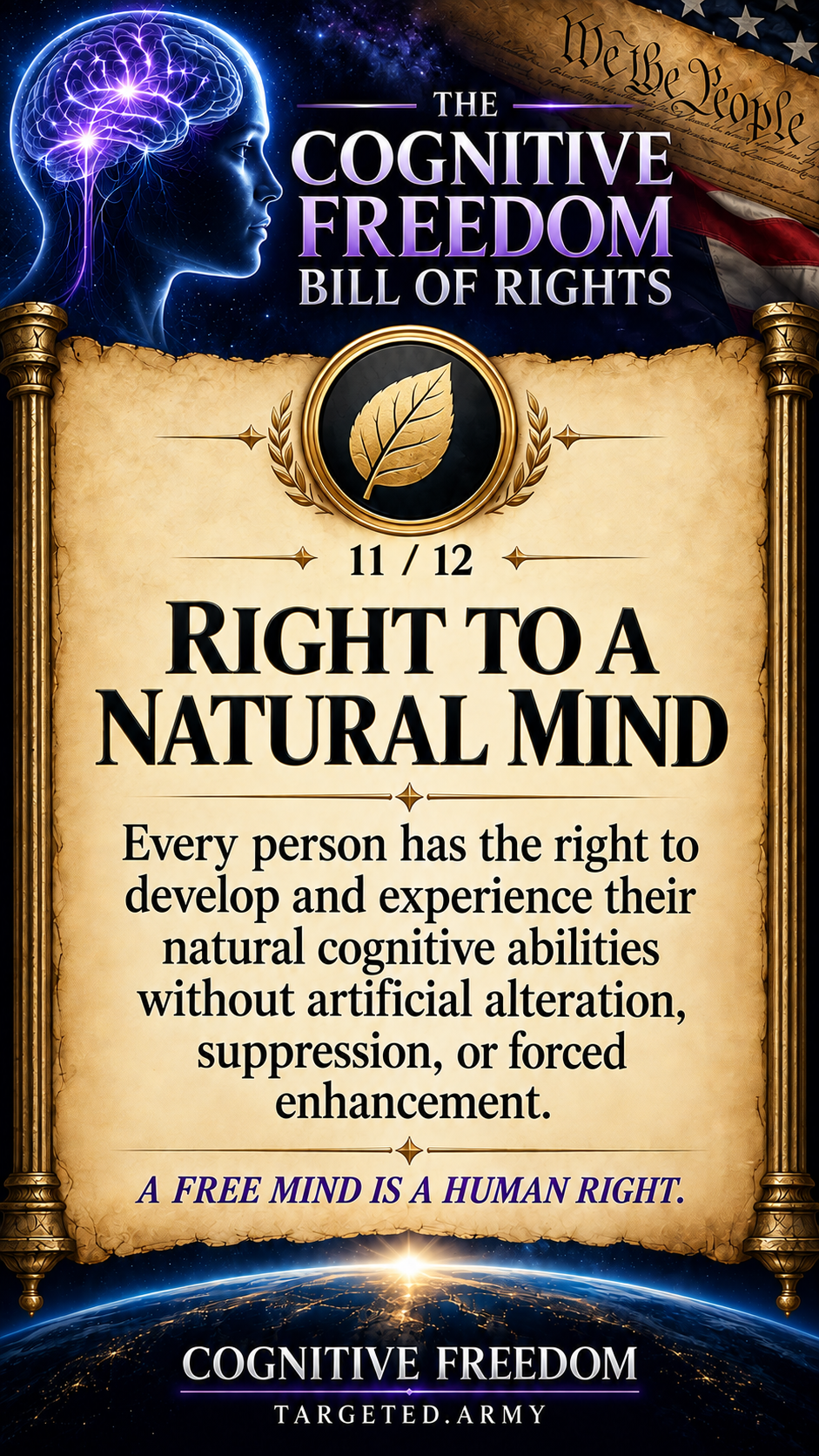
11 / Twelve Rights
Right to a Natural Mind
Every person has the right to develop and experience their natural cognitive abilities without artificial alteration, suppression, or forced enhancement.
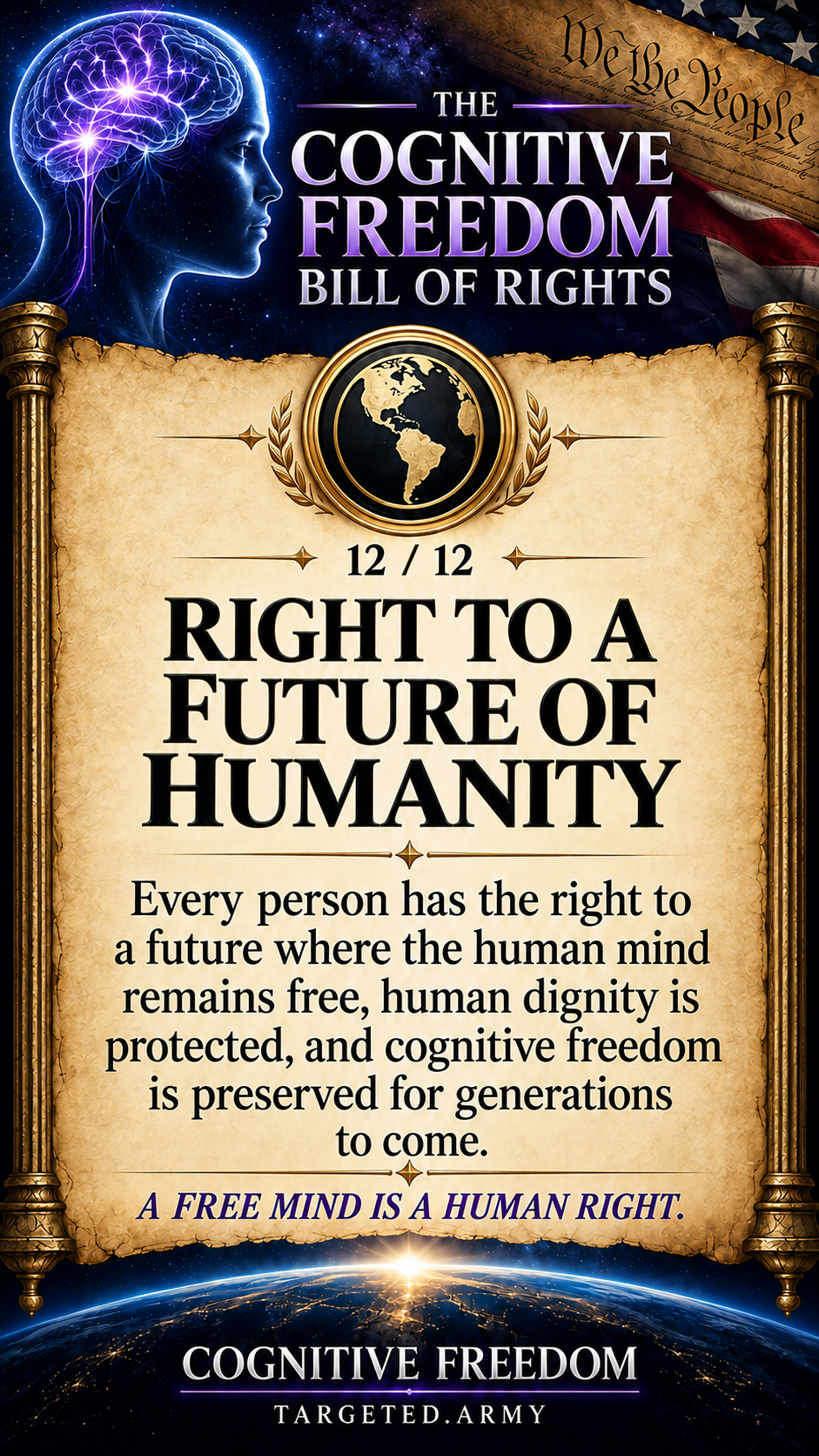
12 / Twelve Rights
Right to a Future of Humanity
Every person has the right to a future where the human mind remains free, human dignity is protected, and cognitive freedom is preserved for generations to come.